Kinesio Taping Therapy in Islamabad
Struggling with muscle pain, joint instability, or a sports injury? PT of City offers expert kinesio taping therapy in Islamabad and Rawalpindi — a safe, drug-free technique using specialized therapy tape to support healing, reduce pain, and keep you moving.
What is Kinesio Taping?
Kinesio taping is a therapeutic technique widely used by physiotherapists to support muscle function, correct movement patterns, improve posture, reduce pain, and manage fluid buildup in the body. Unlike traditional rigid strapping, this flexible physical therapy tape allows for natural movement while still providing targeted support — making it one of the most versatile tools in modern rehabilitation. As a drug-free method, kinesio tape physical therapy is widely used to speed up recovery, improve circulation, and support injured tissue without limiting mobility.
Conditions That Benefit From Kinesio Taping
A wide range of conditions respond well to kinesio taping therapy, including:
- Pain, weakness, and tenderness on the outside of the elbow — often caused by repetitive strain from sports or daily activities — can be effectively managed with targeted taping support.
- This condition causes pain, tingling, and numbness in the hand and forearm due to compression of the median nerve at the wrist. Taping can help relieve pressure and support proper wrist alignment.
- When the ligaments supporting the ankle are stretched beyond their limit, taping therapy provides stability while the injury heals.
- Kinesio taping for knee pain helps reduce discomfort, restore normal joint mechanics, and provide extra support during movement and daily activity.
- One of the most common causes of heel pain, plantar fasciitis responds well to taping techniques that reduce strain on the inflamed tissue connecting the heel to the toes.
- Taping helps reduce fluid buildup, swelling, and inflammation while supporting the surrounding muscles and joints.
- From joint instability to overactive or underactive muscles, kinesio taping supports a wide range of musculoskeletal issues.
Main Types of Kinesio Tape Cuts
I Cut
The most widely used cut, ideal for supporting muscles, ligaments, and tendons — commonly used for tendon pain, back pain, and rotator cuff support.
Y Cut
Used for larger muscle groups and areas requiring broader support, including managing kneecap positioning.
Fan Cut
Primarily used to reduce swelling in the arms and legs, and often applied in managing conditions like lymphedema.
X Cut
Designed for multiple joints and larger treatment areas requiring flexible, wide-reaching support.
How Does Kinesio Taping Help?
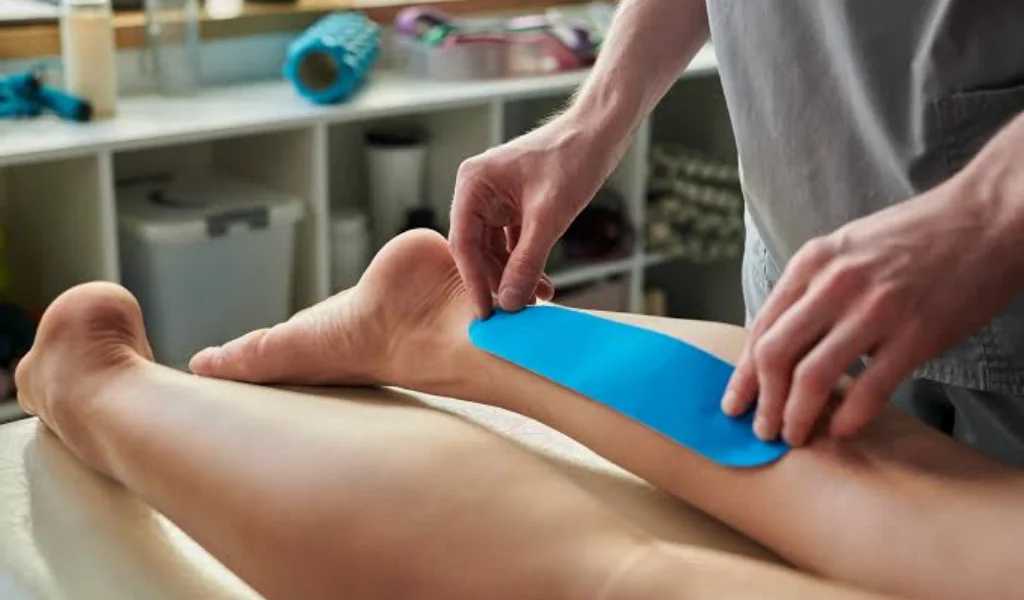
When an injury occurs, fluid and blood often accumulate beneath the skin, adding pressure and causing pain. Applying kinesio tape gently lifts the skin at the injury site, creating space that allows this buildup to disperse more naturally — easing pain and reducing swelling. At the same time, the therapy tape supports the surrounding muscles, reduces overstretching, and allows for a healthy, pain-free range of motion during recovery.
Kinesio Taping Therapy at PT of City
Our physiotherapists perform a detailed, comprehensive assessment before every taping session. At PT of City, we believe in a one-on-one, personalized treatment approach — because every patient’s condition, anatomy, and pain source is different. Rather than relying on generic, cookie-cutter techniques, our individualized treatment plans are designed to properly address the root cause of your pain, ensuring the time you invest in therapy delivers real, lasting results — for patients across Islamabad, DHA Islamabad, and Rawalpindi.
Kinesio Taping Procedure
- A comprehensive assessment is performed by your physiotherapist
- The affected area is cleaned and dried, free of lotion or oil that could affect adhesion
- The therapy tape is measured and cut according to the treatment plan
- Tape is applied to the affected area — starting with an anchor strip, followed by controlled stretch over the target tissue, and finished with a no-stretch end
- The tape is gently rubbed to ensure proper adhesion
- The area is reassessed to check for comfort and correct placement
When Should Kinesio Taping Be Avoided?
While generally safe, kinesio taping isn’t suitable in every situation. It should be avoided in cases of:
Open wounds
Taping over broken skin can lead to irritation or infection
Deep vein thrombosis
increased circulation could risk dislodging a blood clot
Active cancer
increased circulation may not be advisable during active treatment
Fragile skin
Not recommended for skin prone to tearing
Benefits of Kinesio Taping
- Improves blood flow and circulation
- Supports healing of internal injuries
- Provides muscle support
- Helps prevent further injury
- Reduces swelling and inflammation
- Creates space within joints
- Improves overall mobility